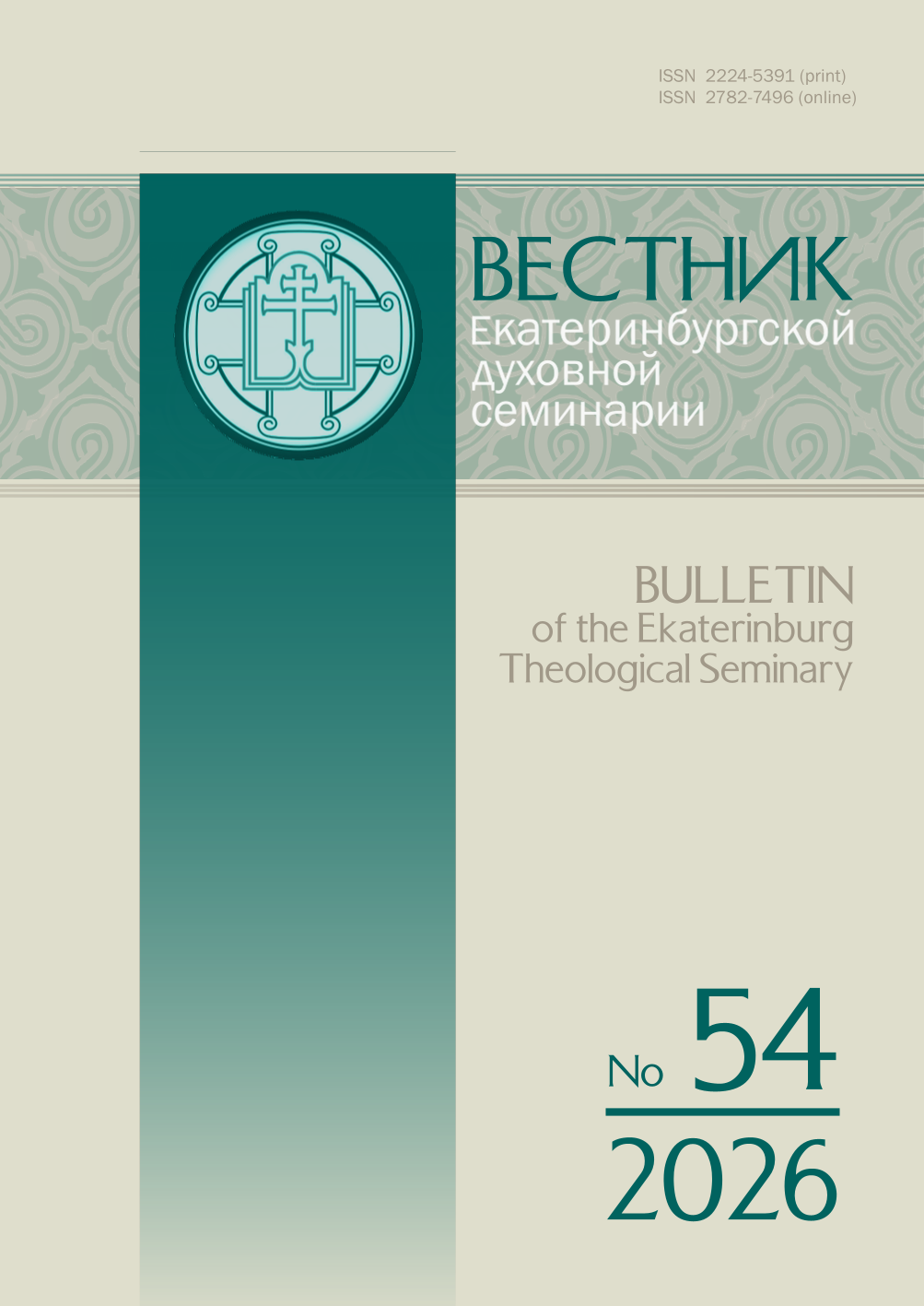
Metropolitan Tryphon (Turkestanov): Spiritual Eldership as a Church Practice and a Subject of Study
On the 165th Anniversary of Birth of Metropolitan Tryphon (Turkestanov; 1861–1934)
DOI:
https://doi.org/10.24412/2224-5391-2026-54-11-33Keywords:
Metropolitan Tryphon (Turkestanov), Venerable Ambrose of Optina, Venerable Barnabas of Gethsemane, Optina Monastery, academic monasticism, eldership, Russian Orthodox theological schoolsAbstract
The article is devoted to one of the most important phenomena in the Orthodox Church — spiritual eldership. In the Russian Church, this phenomenon has had a special significance, both as a church practice and as a subject of study and reflection. The author examines this topic through the prism of the life and legacy of Metropolitan Tryphon (Boris Petrovich Turkestanov; 1861–1934), one of the renowned bishops of the early 20th century. On the one hand, Metropolitan Tryphon had personal ascetic experience in monasteries and close ties with famous spiritual elders: St. Ambrose of Optina, St. Barnabas of Gethsemane and others. On the other hand, Metropolitan Tryphon can be classified, albeit with reservations, as a “scholarly” monastic: graduated from the Moscow Theological Academy, he taught and served as rector of theological schools. In his personal experience, research, and sermons, Metropolitan Tryphon sought to connect these two components — spiritual eldership and scholarship — sometimes finding harmony, sometimes a conflict. This is precisely what will be the focus of this article.
Special attention is paid to Hieromonk Tryphon’s PhD dissertation “Ancient Christian and Optina Spiritual Elders”, presented at the Moscow Theological Academy. In it, the author identifies the common foundations of spiritual eldership in the Eastern tradition and attempts to integrate Optina eldership into this tradition. Hieromonk Tryphon concludes that it is impossible to attain the most important Christian virtues without the spiritual elders’ guidance, which is confirmed by his personal experience of spiritual mentorship from the elders. Later, Bishop Tryphon drew several further conclusions regarding eldership. An elder should be spiritually educated: although God’s will may be revealed to a Christian through a spiritual elder, the latter cannot rely solely on his own spiritual experience for this revelation and must verify it with the spiritual experience of the Church through reliance on Holy Scripture, the patristic heritage, as well as the examples of the ancient ascetics, liturgy, and his spiritual understanding. Monastic life and a spiritual elder’s mentorship are not synonymous. Recognizing the hardships of a monastic life outside the monastery and yearning wholeheartedly for a holy monastery, Bishop Tryphon spent some periods of his life in the world being blessed by spiritual elders to do so. Still, in the hierarchy of values — monastery and obedience — he unquestionably chose obedience: one can live in a monastery, but having no guidance of a spiritual elder one cannot grow in spiritual life; one can live in the world, and obedience to the will of a spiritual elder will help to overcome all hardships, doubts, temptations, despondency, and other dangers. Thus, Bishop Tryphon also addresses the problem of academic — non-monastic — monasticism, a topic of intense debate in his era, through the obedience to a spiritual elder’s will.
References
Антоний (Булатович), иеросхим. Моя борьба с имяборцами на Святой Горе. Петроград, 1917.
Вертоград старчества: Оптинский патерик на фоне истории обители / сост. монах Лазарь (Афанасьев). М., 2016.
Журналы Совета Московской духовной академии за 1895 год. Сергиев Посад, 1897.
Забытые страницы русского имяславия: сборник документов и публикаций по афонским событиям 1910–1913 гг. и движению имяславия в 1910–1918 гг. М., 2001.
Игнатий (Брянчанинов), свт. Особенная судьба народа русского / сост., предисл., прим. А. Д. Каплина / отв. ред. О. А. Платонов. М.: Институт русской цивилизации, 2013.
Трифон (Туркестанов), митр. Древнехристианские и оптинские старцы. М., 1997.
Трифон (Туркестанов), митр. Любовь не умирает: из духовного наследия. М., 2007.
Беглов А. Л. Старчество в трудах русских церковных ученых и писателей // Путь к совершенной жизни: о русском старчестве. М., 2005. С. 5–29.
История Русского Свято-Пантелеимонова монастыря на Афоне с 1912 до 2015 года Святая Гора Афон, 2015. (Сер.: Русский Афон XIX–XX веков; т. 6).
Концевич И. М. Оптина пустынь и ее время. Свято-Троицкая Сергиева лавра, 1995.
Концевич И. М. Стяжание Духа Святого в путях Древней Руси. М., 1993.
Монахологий Русского Свято-Пантелеимонова монастыря на Афоне. Святая Гора Афон, 2013. (Сер.: Русский Афон XIX–XX веков; т. 2).
Русский афонский отечник XIX–XX веков. Святая Гора Афон, 2012. (Сер.: Русский Афон XIX–XX веков).
Сидоров А. И. Древнехристианский аскетизм и зарождение монашества. [М.], 1998.
Смирнов С. И. Духовный отец в древней Восточной Церкви. История духовничества на Востоке. Сергиев Посад, 1906. Ч. 1.
Смирнов С. И. Материалы для истории древне-русской покаянной дисциплины. (Тексты и заметки). Сергиев Посад, 1912.
Смолич И. К. Жизнь и учение старцев. (Путь к совершенной жизни) // Русское монашество, 988–1917. Приложение к «Истории Русской Церкви» митрополита Макария (Булгакова). М., 1999. С. 371–464.
Соловьев А., прот. Старчество по учению святых отцов и аскетов. Семипалатинск, 1900.
Хоружий С. С. Феномен русского старчества в его духовных и антропологических основаниях // Церковь и время. 2002. № 4 (21). С. 208–226.
Четвериков С., прот. Из истории русского старчества // Его же. Бог в русской душе. М., 1998. С. 88–169.
Четвериков С., прот. Молдавский старец Пaисий Величковский. Егo жизнь, учение и влияние на православное монашество // Его же. Правда христианства. М., 1998. С. 3–298.
Downloads
Published
Issue
Section
License
Copyright (c) 2026 Bulletin of the Ekaterinburg Theological Seminary

This work is licensed under a Creative Commons Attribution-NonCommercial 4.0 International License.